 Pin It
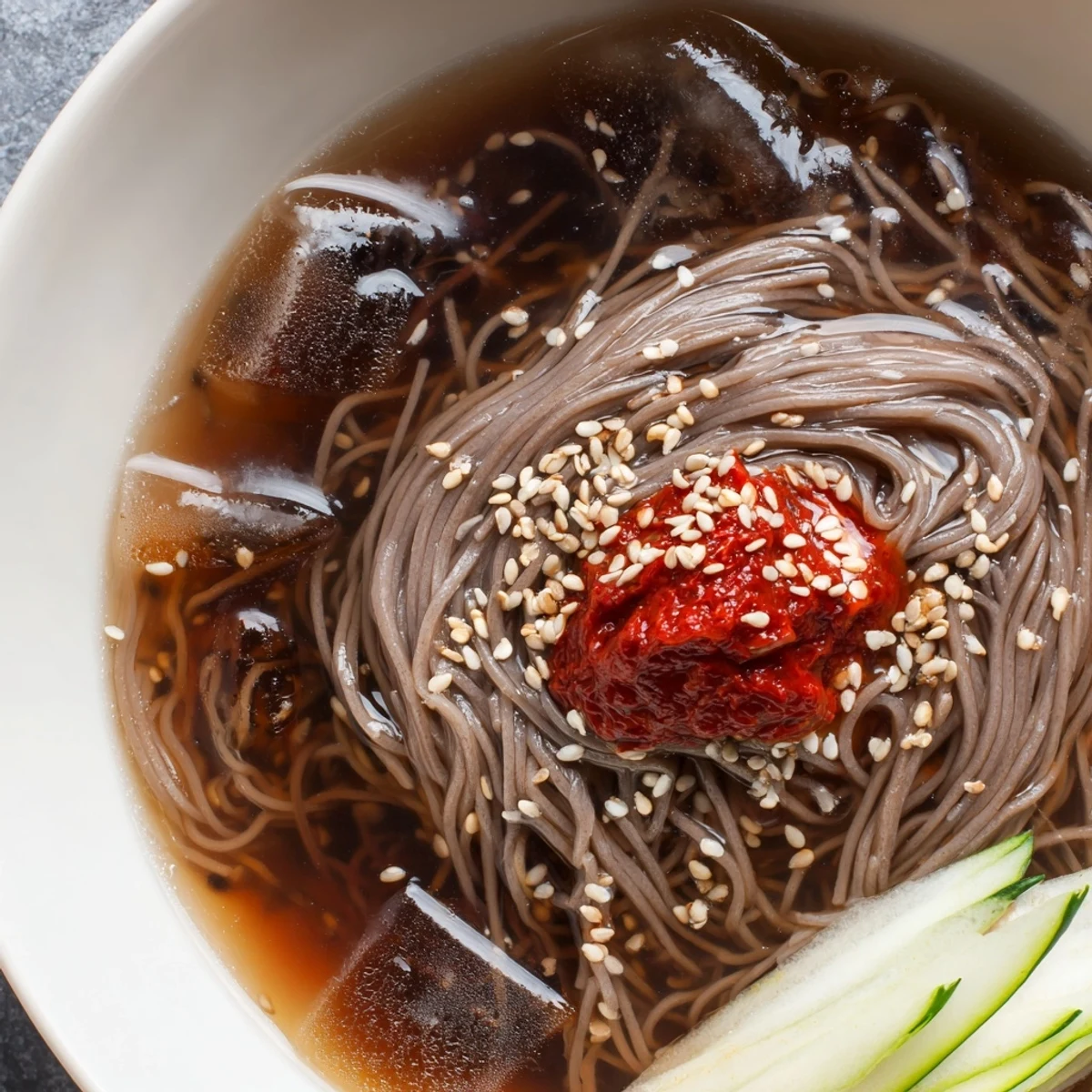
 Experience the refreshing sensation of authentic Korean naengmyeon, a beloved cold dish perfect for sweltering summer days. Chewy buckwheat noodles swim in an ice-cold, tangy beef broth seasoned with rice vinegar, sesame oil, and just the right balance of sweet and savory flavors.
The dish comes together beautifully with thinly sliced Asian pear for sweetness, tender beef brisket for richness, and perfectly boiled eggs for creaminess. A handful of ice cubes keeps everything extra cold, while toasted sesame seeds add nutty depth. Optional gochujang brings gentle heat for those who crave it.
This dairy-free Korean classic delivers a satisfying textural contrast—slippery noodles against crisp cucumber slices, cool broth against warm protein. Prep involves simple boiling and chilling, making it accessible for home cooks seeking genuine Korean flavors.
The first time I encountered naengmyeon was at a tiny Seoul restaurant where the waiter warned me about the scissors. He hovered nearby, amused, as I struggled with the impossibly long chewy noodles. Now I keep kitchen shears within reach whenever I make this at home, laughing at the memory of my tangled first attempt.
Last July, my friend Sarah recovered from a nasty stomach bug and begged for something refreshing but substantial. I made a double batch of this cold noodle soup. She sat on my back porch, genuinely smiling for the first time in days, and requested the recipe before she even finished her bowl.
Ingredients
- Beef broth: Homemade beef broth transforms this dish into something extraordinary, but low sodium store bought works when you are pressed for time
- Rice vinegar: This is what gives the broth its signature refreshing tang that makes you crave another bite
- Naengmyeon noodles: Korean buckwheat noodles have that distinctive chewy texture that holds up beautifully in cold broth
- Asian pear: The crisp sweetness balances the vinegar and adds a fresh crunch that complements the slippery noodles
- Cucumber: Thinly sliced cucumber brings an extra cooling element and a satisfying texture contrast
Instructions
- Mix the cold broth:
- Combine beef broth, cold water, rice vinegar, sugar, soy sauce, sesame oil, and salt in a large bowl, stirring until everything dissolves completely. Chill this mixture in the refrigerator for at least 30 minutes because the broth must be icy cold when served.
- Cook the eggs:
- Boil eggs for exactly 10 minutes, then plunge them into ice water before peeling and halving them for that perfect golden yolk presentation.
- Prep your toppings:
- Slice your cooked beef brisket paper thin, cut cucumber and Asian pear into delicate ribbons, and have your sesame seeds ready to sprinkle.
- Boil the noodles:
- Cook naengmyeon noodles in a large pot of boiling water for 3 to 4 minutes, then drain and rinse them thoroughly under cold running water until the water runs clear and noodles are completely chilled.
- Build the bowls:
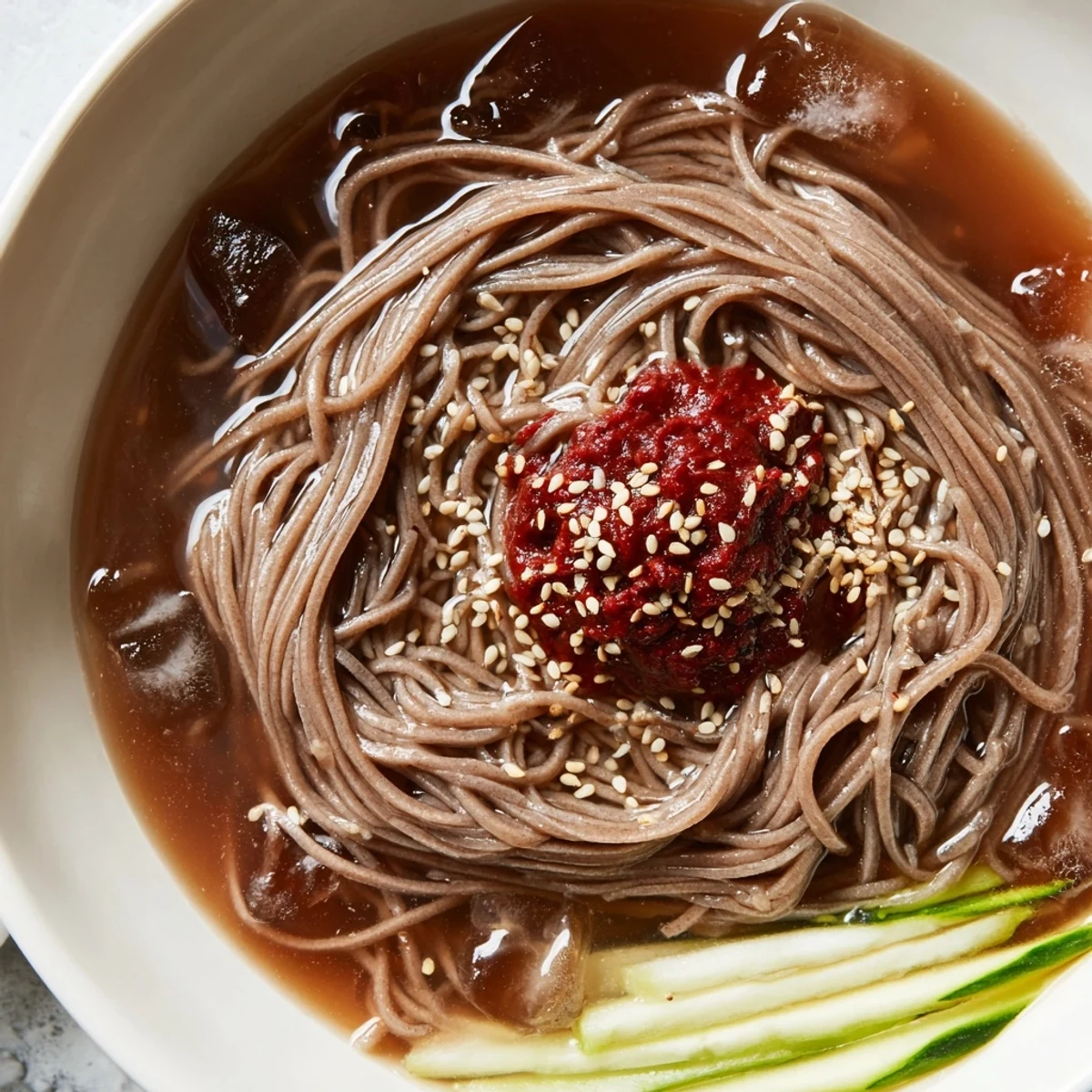
- Divide cold noodles among four bowls, pour over the chilled broth, and arrange cucumber, pear, beef, and egg halves on top before adding ice cubes to keep everything extra cold.
 Pin It
 This recipe has become my go to for summer dinner parties. Guests always hesitate at the concept of cold soup, then ask for seconds before the night is over. The magic of that first slurp when tangy broth meets chewy noodle never gets old.
Making It Your Own
The beauty of naengmyeon lies in how adaptable it is to your taste and pantry. Once you master the basic broth, you can customize it endlessly based on what you have on hand.
Protein Variations
While traditional beef brisket is classic, grilled chicken or even spicy tofu work beautifully here. My vegetarian sister loves it with marinated mushrooms and extra sesame seeds for protein.
Spice It Up
Go ahead and offer gochujang at the table for those who crave heat. A little Korean mustard mixed into the broth creates an entirely new dimension of flavor.
- Keep scissors handy to snip long noodles into manageable portions
- Extra vinegar at the table lets diners adjust the tang to their preference
- The broth tastes even better after resting overnight in the refrigerator
 Pin It
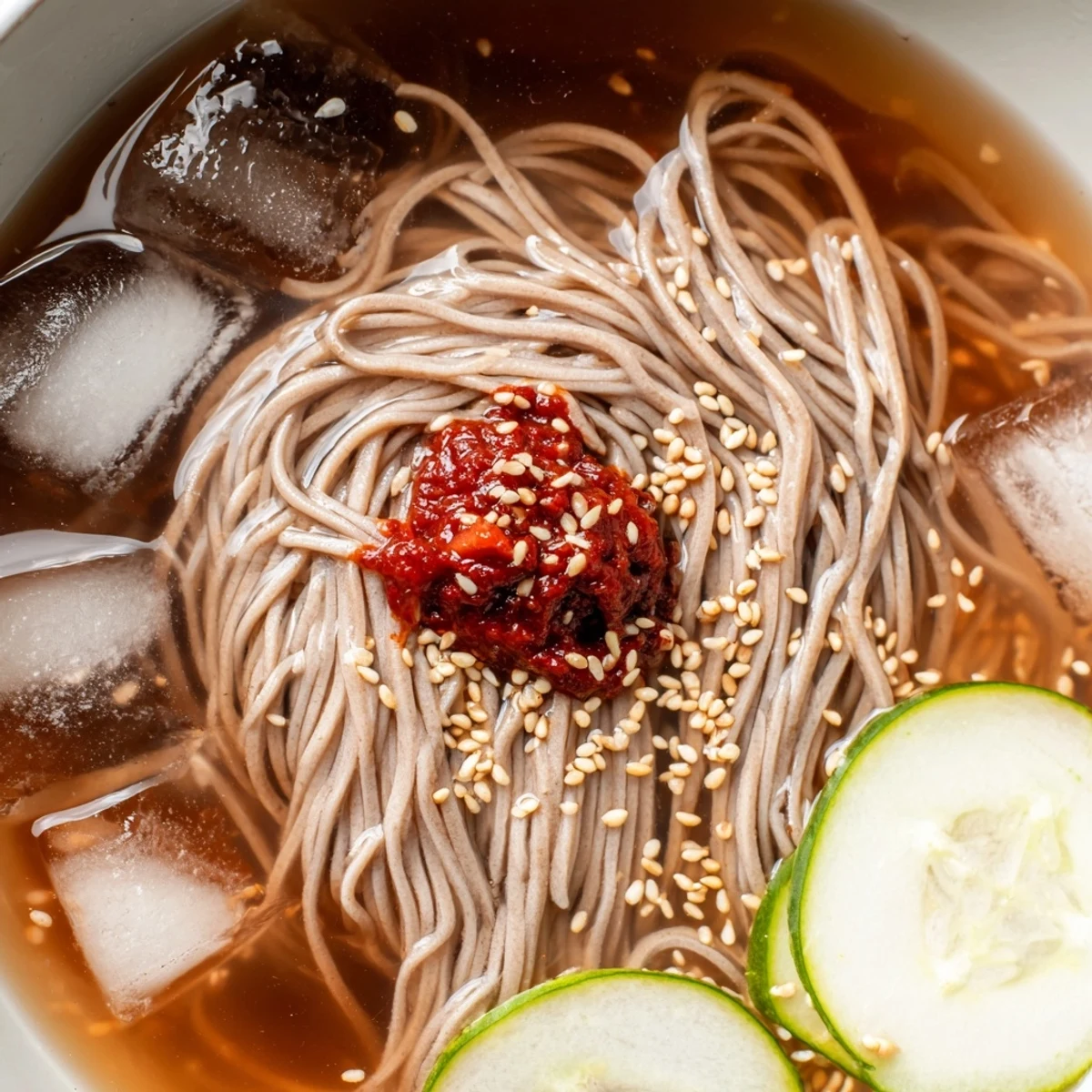
 There is something deeply satisfying about slurping these icy noodles on a sweltering evening. This recipe is your ticket to tasting Seoul without leaving your kitchen.
Recipe FAQ
- → What makes naengmyeon broth authentic?
-
Authentic naengmyeon broth combines beef broth with rice vinegar for tanginess, a touch of sugar for balance, and sesame oil for aromatic depth. Traditional versions often incorporate dongchimi (radish water kimchi) brine for extra fermentation flavor and natural sweetness. The broth must be served ice-cold, sometimes with actual ice cubes added directly to the bowl.
- → Can I substitute naengmyeon noodles?
-
Soba noodles made from buckwheat are the closest substitute, though they're slightly thinner than traditional naengmyeon. Look for Japanese soba with high buckwheat content for the best texture match. Some cold noodle varieties like Korean dangmyeon (sweet potato glass noodles) work but provide a chewier, more gelatinous mouthfeel that changes the dish's character.
- → Why are the noodles rinsed in cold water?
-
Rinsing cooked noodles under cold running water stops the cooking process immediately, preventing them from becoming mushy or overly soft. This step also removes excess surface starch, keeping the broth clear and preventing the noodles from clumping together. The rapid cooling firms the noodles' texture, creating that signature chewy bounce essential to naengmyeon.
- → What protein works best in naengmyeon?
-
Thinly sliced beef brisket is traditional, offering richness that complements the tangy broth. Pork belly or sliced chicken breast make excellent alternatives for different flavor profiles. For vegetarian versions, marinated tofu or seitan strips work well. The key is slicing proteins thinly against the grain so they're tender enough to eat with chopsticks alongside the noodles.
- → How far in advance can I prepare components?
-
The broth benefits from chilling several hours or overnight, allowing flavors to meld thoroughly. Cooked proteins and boiled eggs can be prepared up to 2 days ahead and stored refrigerated. Fresh toppings like cucumber and Asian pear should be sliced just before serving to maintain crispness and prevent oxidation. Noodles cook quickly and are best prepared immediately before assembling the bowls.
- → What vegetables enhance naengmyeon?
-
Asian pear provides essential sweetness and crunch, while thin cucumber ribbons add refreshing crispness. Korean white radish (mu) sliced paper-thin offers mild pepperiness. For more vegetable variety, consider adding shredded carrot for color, thinly sliced green onions for bite, or Napa cabbage leaves for additional texture that soaks up the flavorful broth.