 Pin It
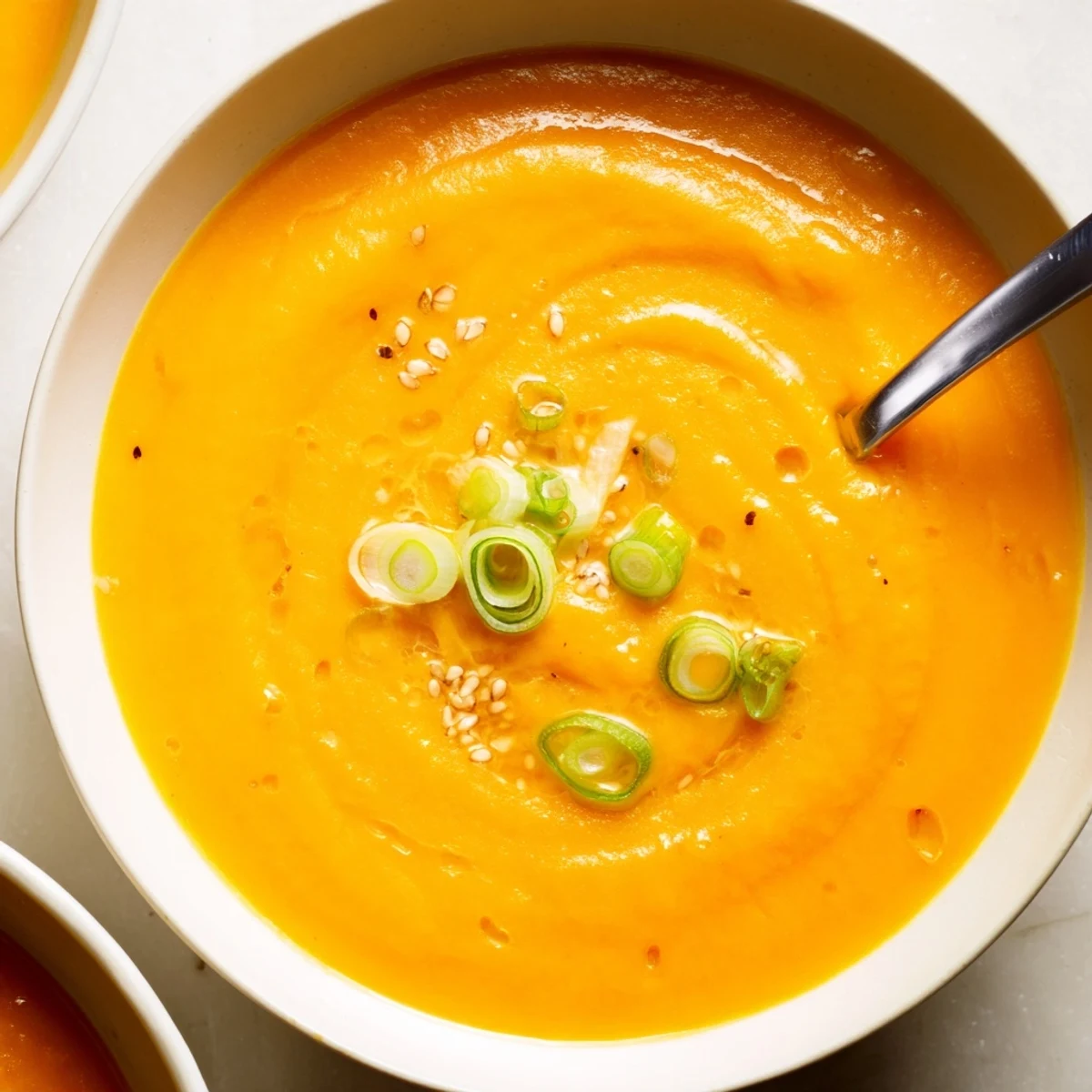
 This vibrant carrot and ginger miso soup combines sautéed onion, garlic and fresh ginger with simmered carrots, pureed until silky. White miso is tempered in hot broth and stirred in off the heat to preserve delicate umami. Ready in about 35 minutes, it yields four comforting bowls; finish with scallions and toasted sesame for crunch. For creamier texture, stir in a splash of coconut milk.
The rain was hammering against the kitchen window that Tuesday evening, and I had a bag of carrots sitting on the counter with no plan beyond roasting them again. Something about the chill in the air made me crave soup, something warm and bright enough to cut through the grey. I rummaged through the fridge and found a knob of ginger and a tub of white miso paste hiding behind the kimchi, and dinner announced itself.
My neighbor stopped by once while I was making this and stood in the doorway sniffing the air like a cartoon character floating toward a pie. She ended up staying for two bowls and sent me a text the next morning asking for the recipe.
Ingredients
- 1 lb carrots, peeled and sliced: The star here, so pick ones that feel heavy and firm for the sweetest result.
- 1 medium onion, diced: Yellow or white onion both work, just build that sweet aromatic base.
- 2 garlic cloves, minced: Fresh garlic only, the jarred stuff will not do this soup justice.
- 1 inch piece fresh ginger, peeled and grated: Use the edge of a spoon to peel it, way easier than a peeler.
- 4 cups vegetable broth: Low sodium lets you control the salt, especially since miso brings its own punch.
- 2 tbsp white miso paste: White is milder and sweeter, perfect here, but shiro miso works too.
- 1 tbsp olive oil: Just enough to get the onions going without overpowering anything.
- 1 tbsp soy sauce: A splash deepens the umami, use tamari if you need it gluten free.
- Salt and pepper: Taste at the end, miso is already salty so go easy at first.
- 2 scallions, thinly sliced: For a fresh bite on top that wakes everything up.
- 1 tbsp toasted sesame seeds: Crunch and a little nuttiness to finish each bowl.
Instructions
- Wake up the onions:
- Heat the olive oil in a large pot over medium heat and cook the diced onions for about four minutes until they turn glassy and sweet. Stir them around so they soften evenly without catching color.
- Add the aromatics:
- Toss in the garlic and grated ginger, stirring constantly for about a minute until your kitchen smells incredible. Keep the heat moderate so nothing browns or turns bitter.
- Introduce the carrots:
- Stir in the sliced carrots and let them cook alongside the aromatics for two minutes. This short sweat helps the carrots absorb all those flavors before the liquid joins.
- Simmer everything together:
- Pour in the vegetable broth, bring it to a boil, then drop the heat and let it simmer for eighteen to twenty minutes. The carrots should be fork tender and yielding when you test them.
- Blend until silky:
- Remove the pot from heat and use an immersion blender to puree until completely smooth, or work in careful batches with a standard blender. Hold a towel over the blender lid if using the regular kind, hot soup expands fast.
- Add the miso gently:
- Scoop a ladleful of hot soup into a small bowl and dissolve the miso paste into it before stirring it back into the pot along with the soy sauce. Never add miso directly to boiling soup or you kill the live cultures and mute the flavor.
- Finish and serve:
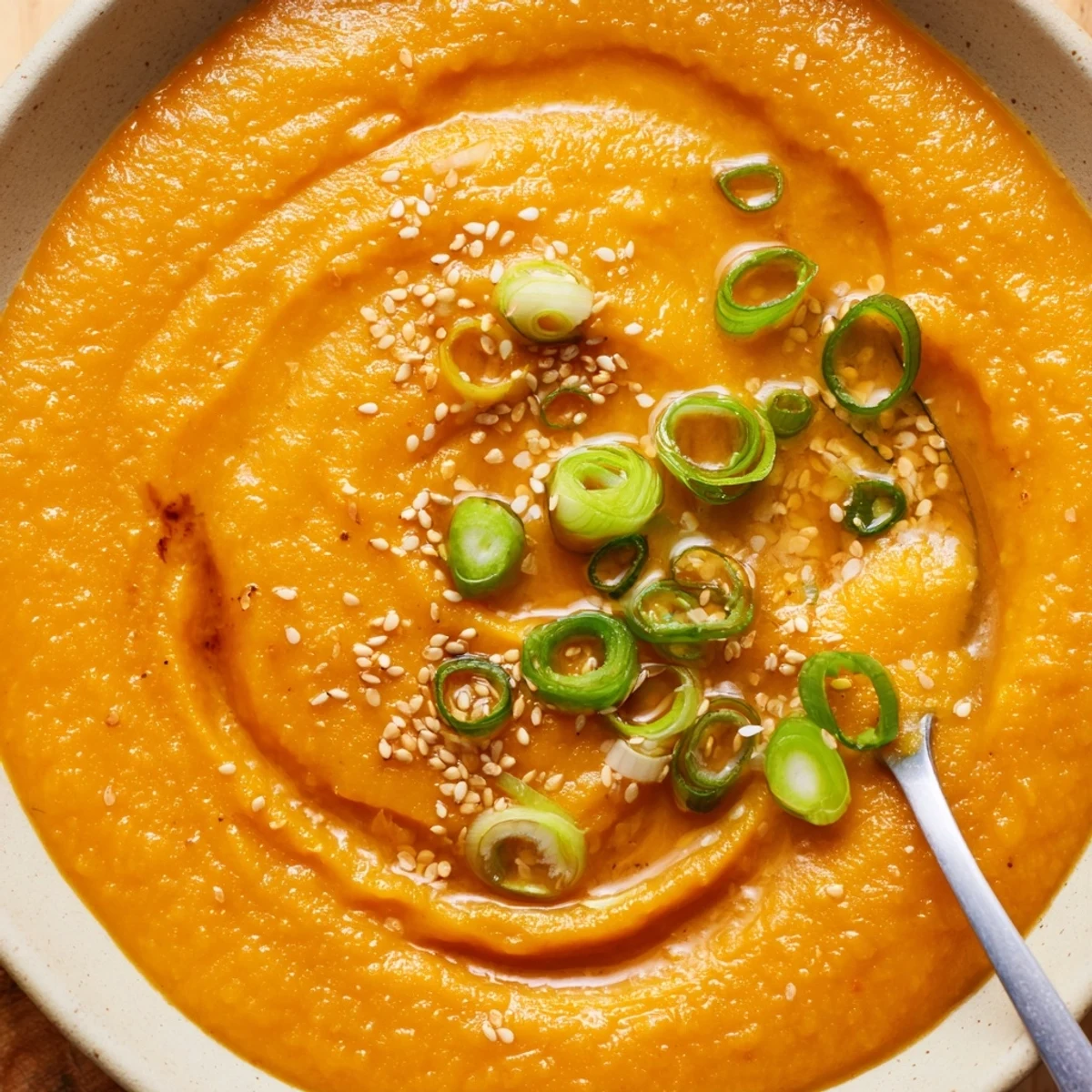
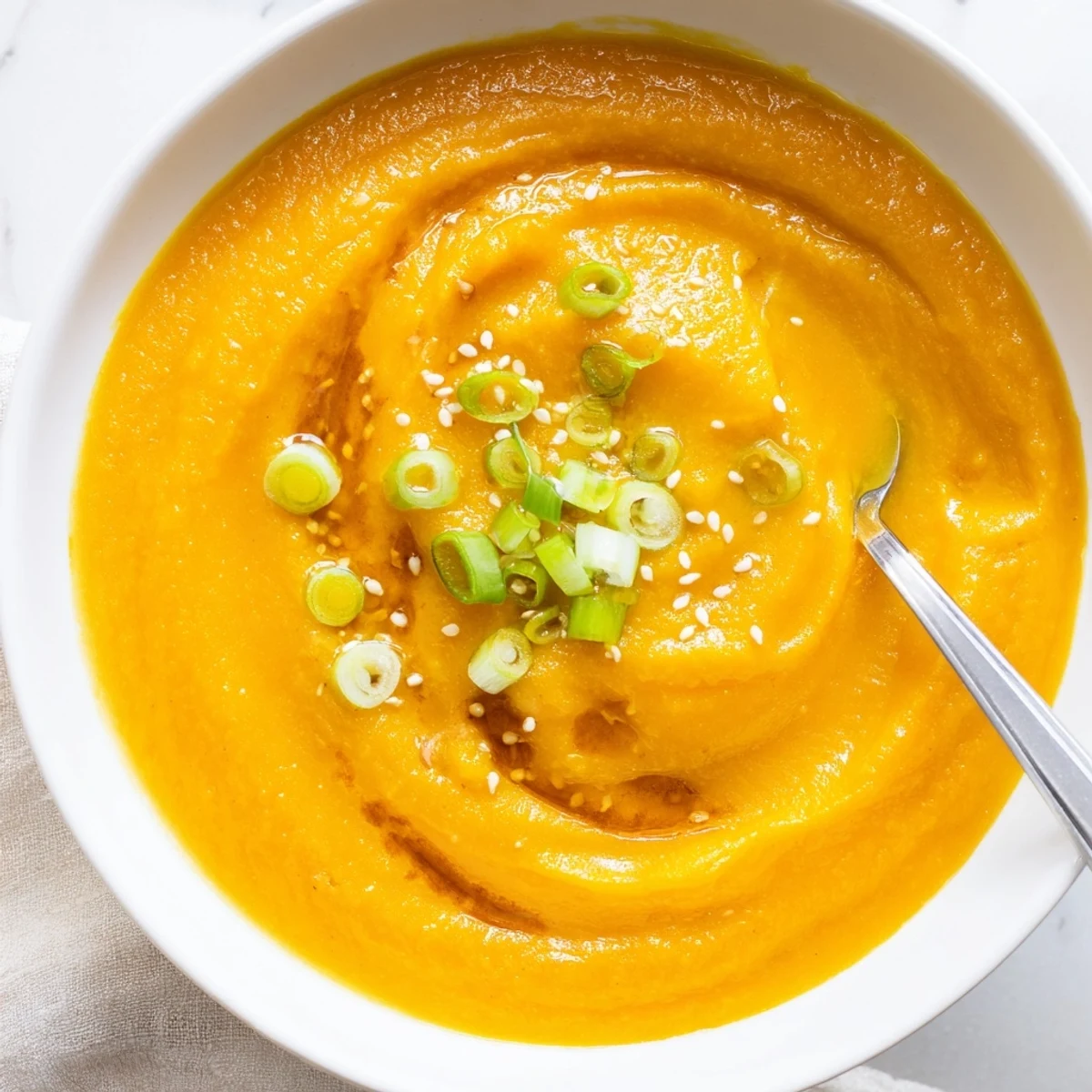
- Reheat gently if needed but do not let it boil after the miso goes in. Ladle into bowls and scatter scallions and sesame seeds over each serving.
 Pin It
 I once packed this soup in a thermos for a friend recovering from a cold and she called it liquid sunshine, which is exactly the kind of thing you want to hear about something you just threw together on a rainy night.
A Few Twists Worth Trying
If you have half a sweet potato lying around, toss it in with the carrots for extra body and a slightly different sweetness. A splash of coconut milk swirled in at the end makes it creamy without any dairy.
Tools That Make It Easier
An immersion blender saves you from transferring hot soup to a blender and washing extra dishes. If you only have a standard blender, fill it no more than halfway per batch and hold a kitchen towel over the lid.
Storing and Reheating
This soup keeps beautifully in the fridge for up to four days and actually tastes better the next day when the flavors have settled. Reheat it gently on the stove over low heat, never letting it come to a full boil.
- Freeze portions in flat freezer bags for up to three months.
- Label the bags with the date so you remember when you made it.
- Add fresh garnishes only after reheating, not before freezing.
 Pin It
 Some nights call for something simple that still feels like you made an effort, and this soup lives in that sweet spot. Keep carrots and miso on hand and you are never more than thirty minutes away from comfort.
Recipe FAQ
- → How do I keep it gluten-free?
-
Use tamari or a certified gluten-free soy sauce and choose a gluten-free miso paste. Always check labels on packaged broth and miso to avoid hidden gluten.
- → Can I use frozen carrots?
-
Yes. Add frozen carrots straight to the simmering broth and allow a few extra minutes until very tender before blending. Texture may be slightly softer but still delicious.
- → Why should I avoid boiling after adding miso?
-
Miso is delicate; boiling can dull its nuanced umami and alter texture. Dissolve miso in hot liquid and stir it in off the heat, then reheat gently without boiling.
- → How can I make it creamier?
-
Stir in a splash of coconut milk or a few tablespoons of cashew cream after blending. Blending longer with an immersion blender also yields a silkier mouthfeel.
- → What garnishes and pairings work best?
-
Top with thinly sliced scallions and toasted sesame seeds for contrast. A pinch of chili flakes adds heat. Pairs nicely with a light, crisp white like Riesling or a simple green salad.
- → How should I store and reheat leftovers?
-
Refrigerate in an airtight container for 3–4 days or freeze up to 2 months. Thaw overnight, reheat gently on the stove and avoid boiling after reintroducing miso to preserve flavor.