 Pin It
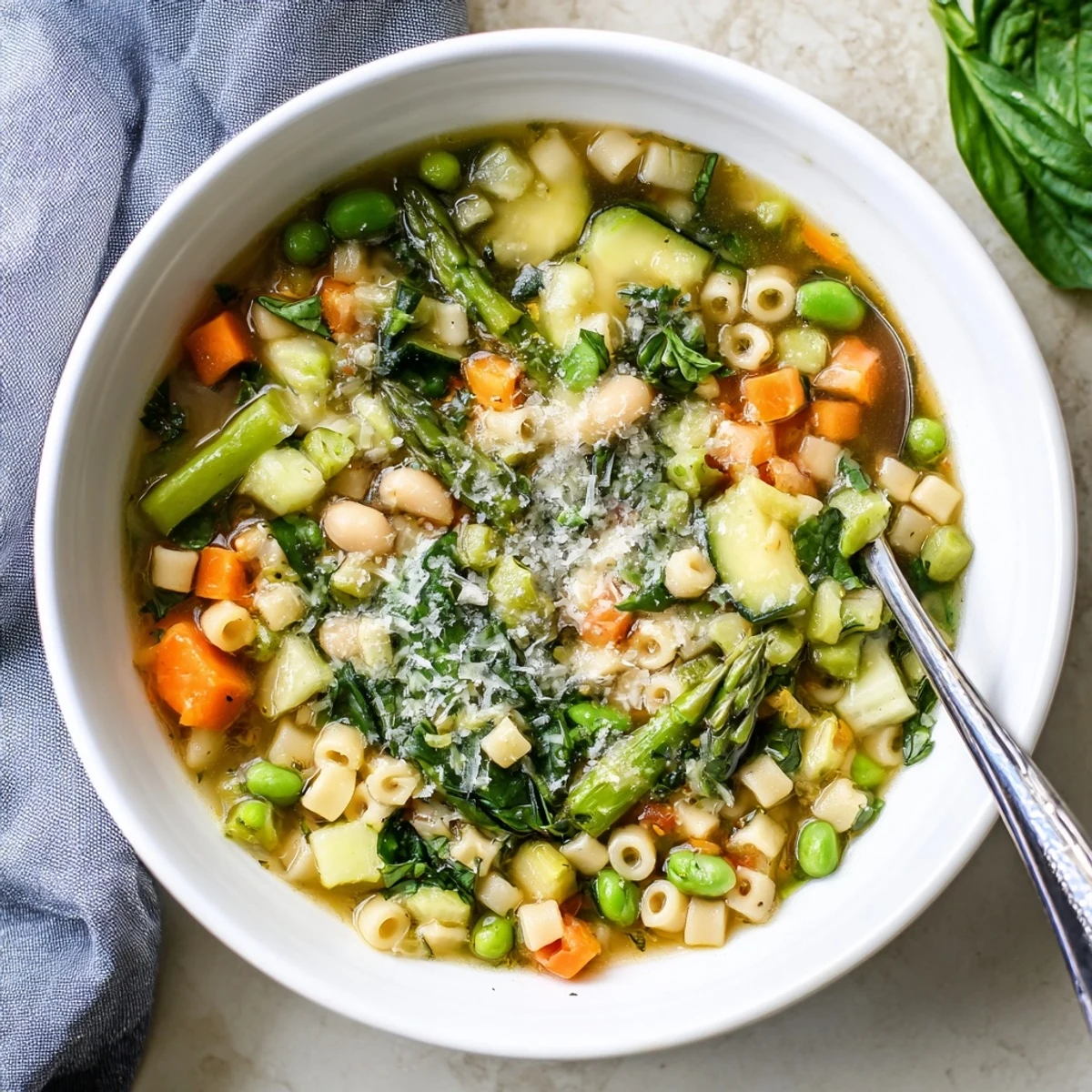
 This spring minestrone brings together the best of the season in one pot—tender asparagus, sweet peas, diced zucchini, and creamy cannellini beans simmered in vegetable broth with small pasta. Finished with a handful of baby spinach, chopped basil and parsley, and a bright squeeze of lemon juice, it comes together in just 45 minutes. The result is a light yet satisfying bowl that pairs beautifully with crusty bread and a glass of Pinot Grigio. Easily adapted with fava beans or green beans, and made vegan by skipping the optional Parmigiano Reggiano.
The farmers market was overflowing with asparagus bundles the size of small bouquets, and I walked out with way more than any reasonable person needs. That impulse buy turned into this soup, which has since become my unofficial signal that winter is officially over.
I made a massive batch of this for a friend who had just moved into a new apartment with barely any furniture but a perfectly good stove. We sat on the floor eating bowl after bowl, and she said it was the best housewarming gift anyone could have brought.
Ingredients
- Olive oil: Use a good quality one here since its the foundational fat and you will taste its fruitiness in every spoonful
- Onion: Finely chopped so it melts into the broth rather than leaving chunky bits
- Garlic: Minced fresh, never jarred, because the aromatic difference is impossible to miss
- Carrots: Diced small so they cook at the same rate as the softer spring vegetables
- Asparagus: Cut into one inch pieces and use only the tender stalks, saving woody ends for stock another day
- Zucchini: Diced to match the carrots so the soup has a uniform, pleasing texture
- Peas: Fresh shelled peas are incredible if you can find them, but frozen work beautifully and save serious time
- Baby spinach: Added at the very end so it just wilts without turning murky or losing its bright color
- Vegetable broth: A high quality store bought broth is fine, but homemade will elevate this dramatically
- Cannellini beans: Drained and rinsed well to remove the starchy can liquid that can cloud the soup
- Small pasta: Ditalini is traditional but orzo works great, just avoid anything too large that will dominate each bowl
- Salt and black pepper: Season gradually and taste along the way since the beans and broth both bring their own saltiness
- Fresh basil and parsley: Chopped right before adding so their oils are at full potency
- Fresh lemon juice: This single tablespoon transforms the entire bowl from good to unforgettable
- Parmigiano Reggiano: Optional but strongly recommended, grated finely so it melts into the hot soup like lace
Instructions
- Build the base:
- Heat olive oil in a large pot over medium heat, add the chopped onion, and let it soften for about three minutes until it turns translucent and sweet.
- Add aromatics and carrots:
- Stir in the minced garlic and diced carrots, cooking for two to three minutes until the kitchen fills with that warm, garlicky fragrance.
- Bring in the spring vegetables:
- Add the asparagus, zucchini, and peas, stirring occasionally for another two minutes so they get lightly coated in the oil.
- Simmer with broth and pasta:
- Pour in the vegetable broth, bring it to a boil, then add the cannellini beans and pasta. Reduce the heat, cover, and let everything simmer gently for eight to ten minutes until the pasta and vegetables are tender.
- Wilt the greens:
- Stir in the baby spinach, chopped basil, and parsley, cooking just one to two minutes until the spinach collapses into silky ribbons.
- Finish with brightness:
- Remove the pot from heat, stir in the fresh lemon juice, and season with salt and pepper until it tastes exactly right to you.
- Serve with love:
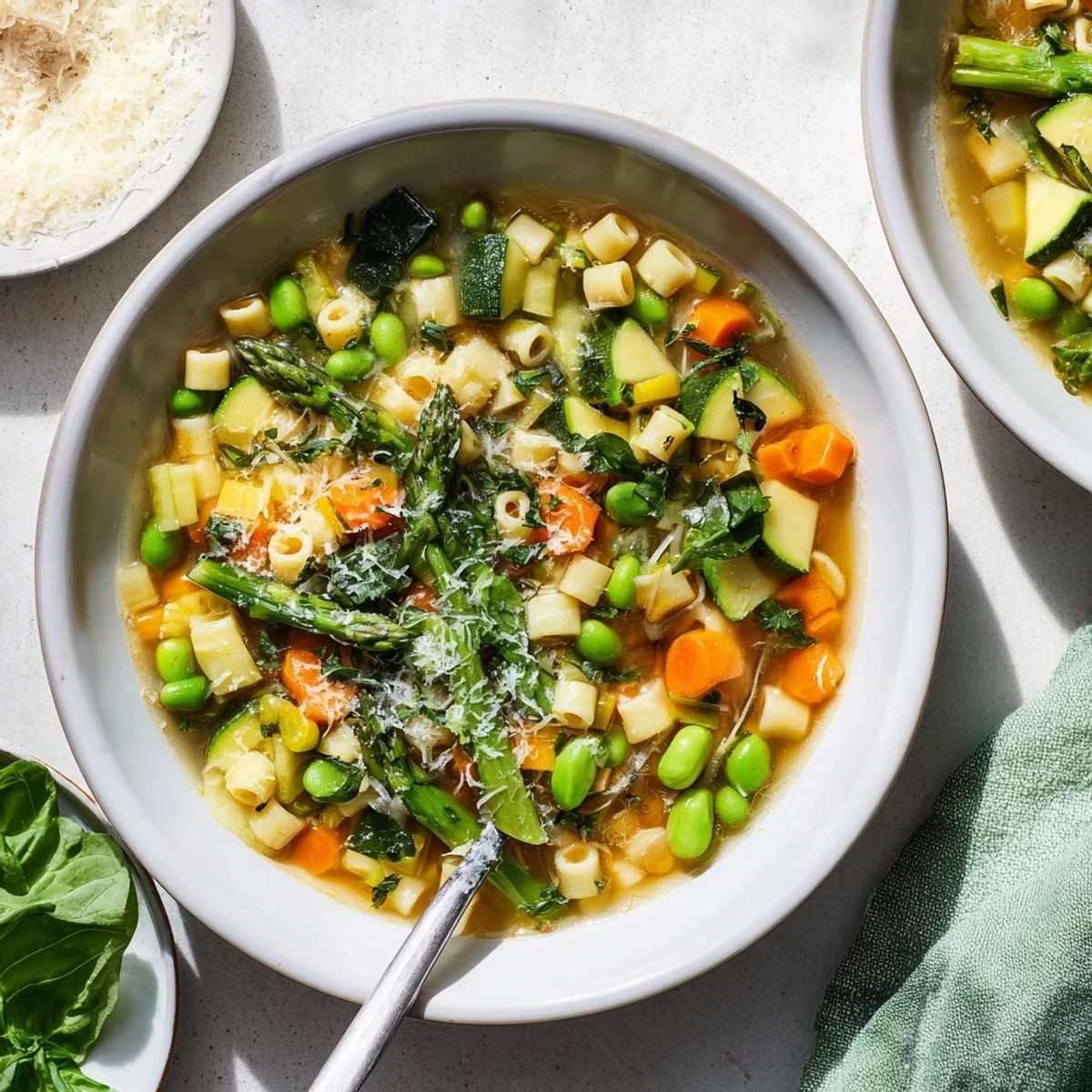
- Ladle the soup into warm bowls and finish with a generous shower of grated Parmigiano Reggiano if you are using it.
 Pin It
 My mother in law asked for the recipe after trying it once, and when I told her how simple it was she genuinely did not believe me. There is something powerful about a dish that creates that kind of disbelief.
Picking the Right Vegetables
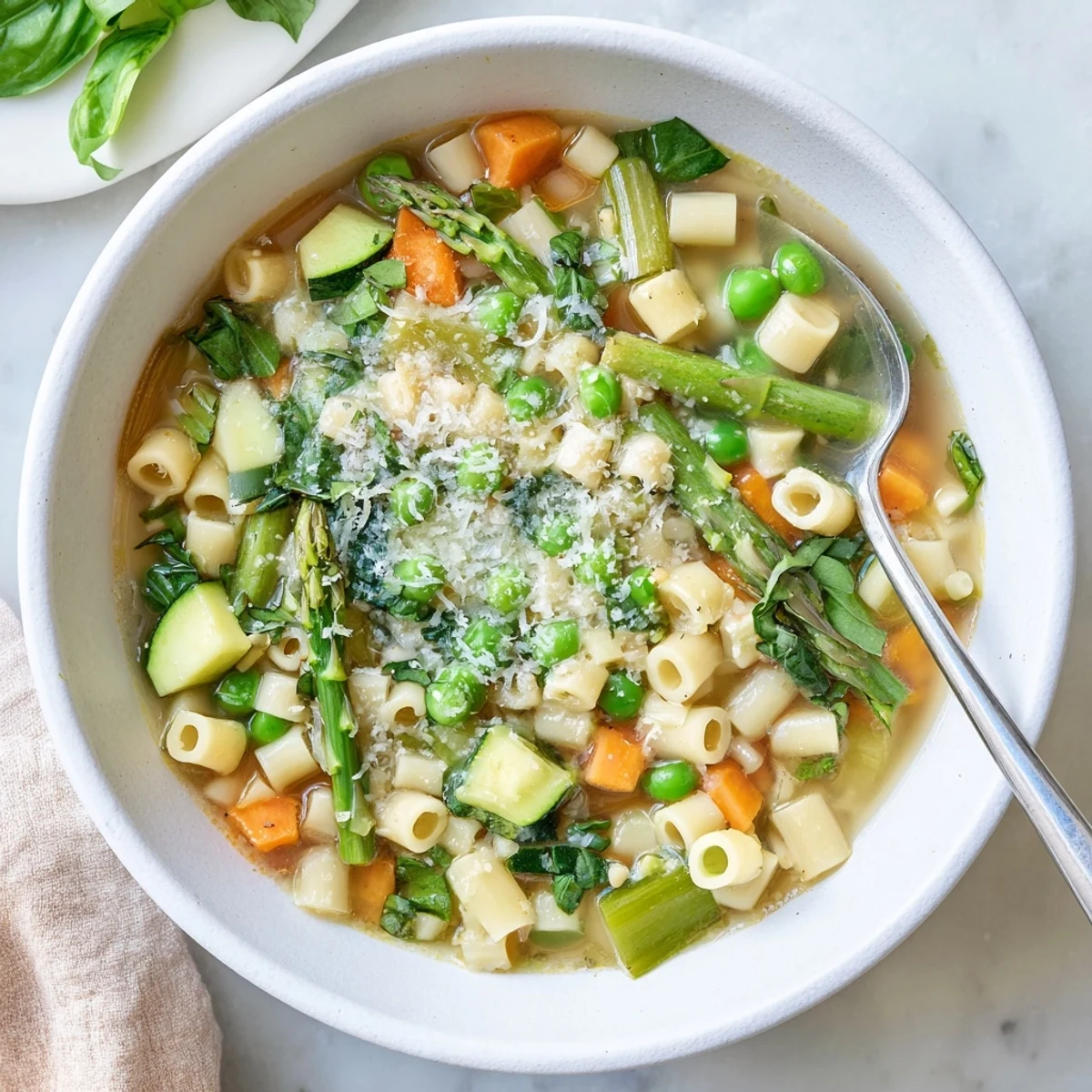
I have learned that the magic of this soup lives in treating each vegetable with respect rather than tossing everything in at once. Carrots go in early because they need the extra time, while asparagus and peas only need a brief kiss of heat to stay vibrant and snappy.
What to Serve Alongside
A crusty sourdough loaf ripped into pieces is nonnegotiable for soaking up the broth at the bottom of the bowl. A chilled Pinot Grigio cuts through the richness of the cheese and complements the vegetables without overpowering them.
Making It Your Own
Swap in fava beans or green beans if that is what looks best at the market, and do not be afraid to add a pinch of red pepper flakes if you want a gentle warmth. The structure of this soup is forgiving enough to handle your personal touches gracefully.
- Use gluten free pasta to make this accessible without changing anything else
- Try a dollop of pesto on top instead of Parmesan for a bolder herbal punch
- Leftovers taste even better the next day once the flavors have had time to fully mingle
 Pin It
 This soup is the reason I keep checking the farmers market for asparagus long before anyone else thinks about spring cooking. It just makes the whole kitchen feel alive.
Recipe FAQ
- → What vegetables work best in spring minestrone?
-
Asparagus, peas, zucchini, and carrots are classic choices. You can also add fava beans, green beans, or leeks depending on what's fresh and available.
- → Can I make this minestrone vegan?
-
Yes, simply omit the Parmigiano Reggiano garnish or replace it with a plant-based cheese alternative. The soup itself is entirely plant-based.
- → What type of pasta should I use?
-
Small shapes like ditalini or orzo work best because they fit well on a spoon. Any small pasta will do—just avoid long strands or oversized shapes.
- → How long does leftover minestrone keep?
-
Stored in an airtight container in the refrigerator, it stays fresh for up to 3 days. The pasta may absorb some broth, so add a splash when reheating.
- → Can I freeze spring minestrone?
-
Yes, though the pasta texture may soften slightly after thawing. For best results, freeze without the pasta and cook it fresh when you reheat the soup.
- → What should I serve with this soup?
-
Crusty bread is the natural pairing. A light white wine like Pinot Grigio complements the bright, herbaceous flavors nicely.